



Author

By Chris Bruen
Chris Bruen is Senior Director of Research and Chief Economist, with primary responsibility for aiding in and expanding upon NMHC's research in housing and economics. Chris holds a bachelor's degree in Finance from The George Washington University and an M.S. in Economics from Johns Hopkins University.
High housing costs are keeping more adults living with parents or roommates, creating pent-up rental demand that could return as housing becomes more affordable.
Key Takeaways:
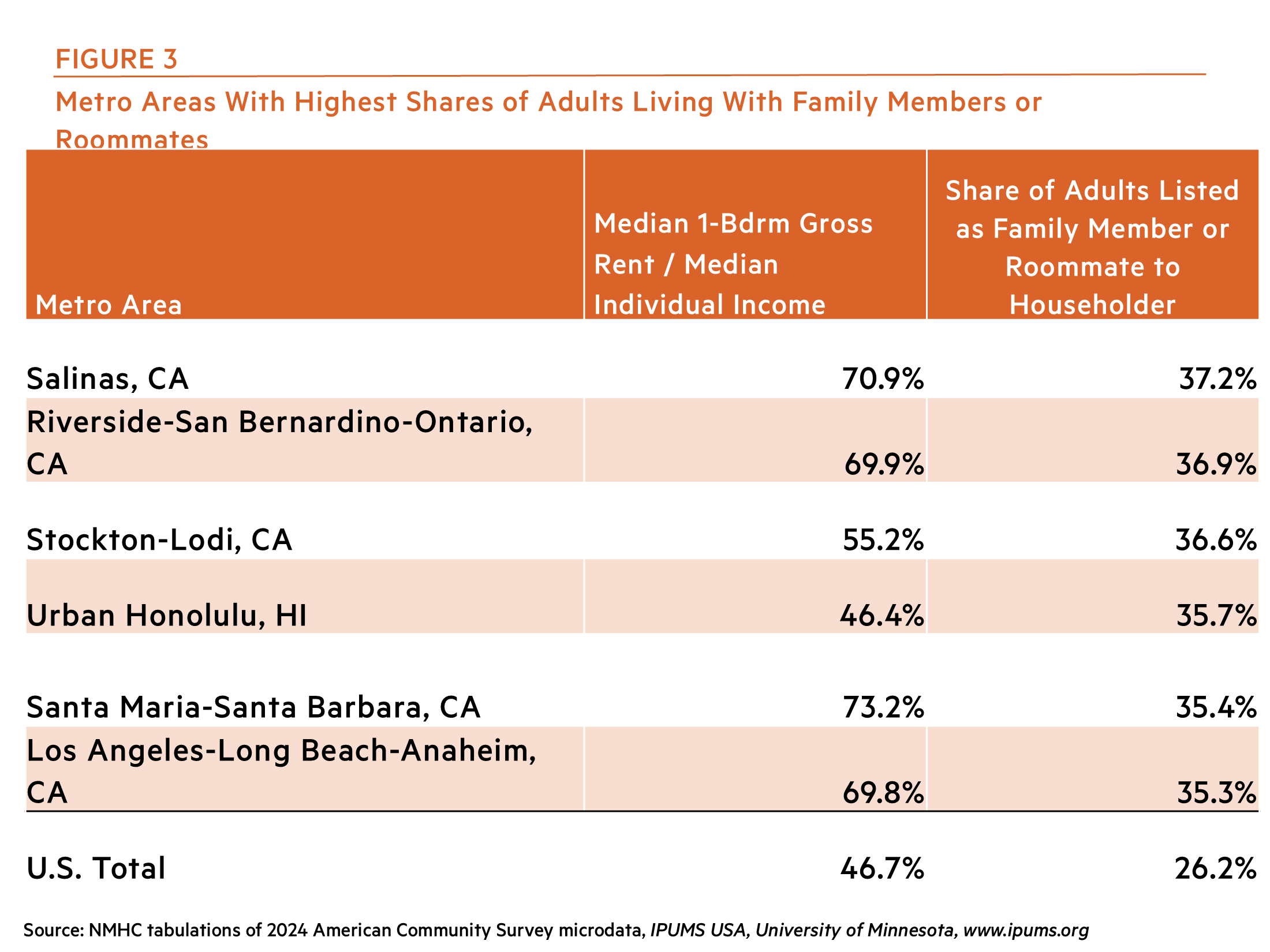
- In the nation’s most expensive rental markets, adults are far more likely to live with family members or roommates. In 2024, Salinas, CA recorded both the highest median rent to income and the highest share of adults living with adult family members or roommates (37.2%).
- Metro areas with higher housing costs tend to have lower rates of household formation and higher shares of adults living with roommates or family members.
- Rising housing costs have led to a decrease in household formation over time.
- The U.S. adult population has gotten older, more single, and better educated over time, which has had a positive influence on household formation and housing demand.
National housing shortage estimates published by Freddie Mac (3.7 million homes) and the Brookings Institution (4.9 million homes) account for pent-up or “latent” demand: households that would have been formed if housing costs had not risen so much over the past few decades. This Research Notes examines in greater detail how housing costs, along with other socioeconomic factors, influence the rate at which U.S. adults decide to form their own households.
The analysis shows how rising housing costs due to underbuilding have prevented many Americans from forming their own households over the past decade and that adults are less likely to form households in more expensive parts of the country. At the same time, changing demographics (an adult population that has become older, better educated and more often single) has had a positive effect on household formations and housing demand.
Living with Family and Roommates in High-Cost Metros
In 2024, Salinas and Riverside-San Bernardino, CA had the lowest headship rates in the country, with just 41.6% of adult residents heading their own household in both metros (significantly lower than the national average of 50.3%).1 Put another way, Salinas and Riverside recorded the highest number of adult residents per household (2.4).
Meanwhile, 17.8% of adults in Salinas and 20.8% of adults in Riverside-Bernardino reported living with their parents, compared to just 12.8% of adults nationwide.
It’s no coincidence that Salinas and Riverside-San Bernardino are also some of the most expensive rental markets in the country. The median rent for a one-bedroom apartment in Salinas ($1,800 per month) represented 70.9% of the metro’s median individual income in 2024, higher than the national average (46.7%) as well as nearly every metro area examined (the two exceptions being Santa Marita-Santa Barbara, CA and Miami-Fort Lauderdale-West Palm Beach, FL). Riverside-San Bernardino was close behind, with its median rent for a one-bedroom apartment ($1,773) representing 69.9% of the metro’s median individual income.
Figure 1 below shows that Salinas and Riverside are not isolated cases; metro areas with higher housing costs relative to incomes tend to have lower rates of household formation.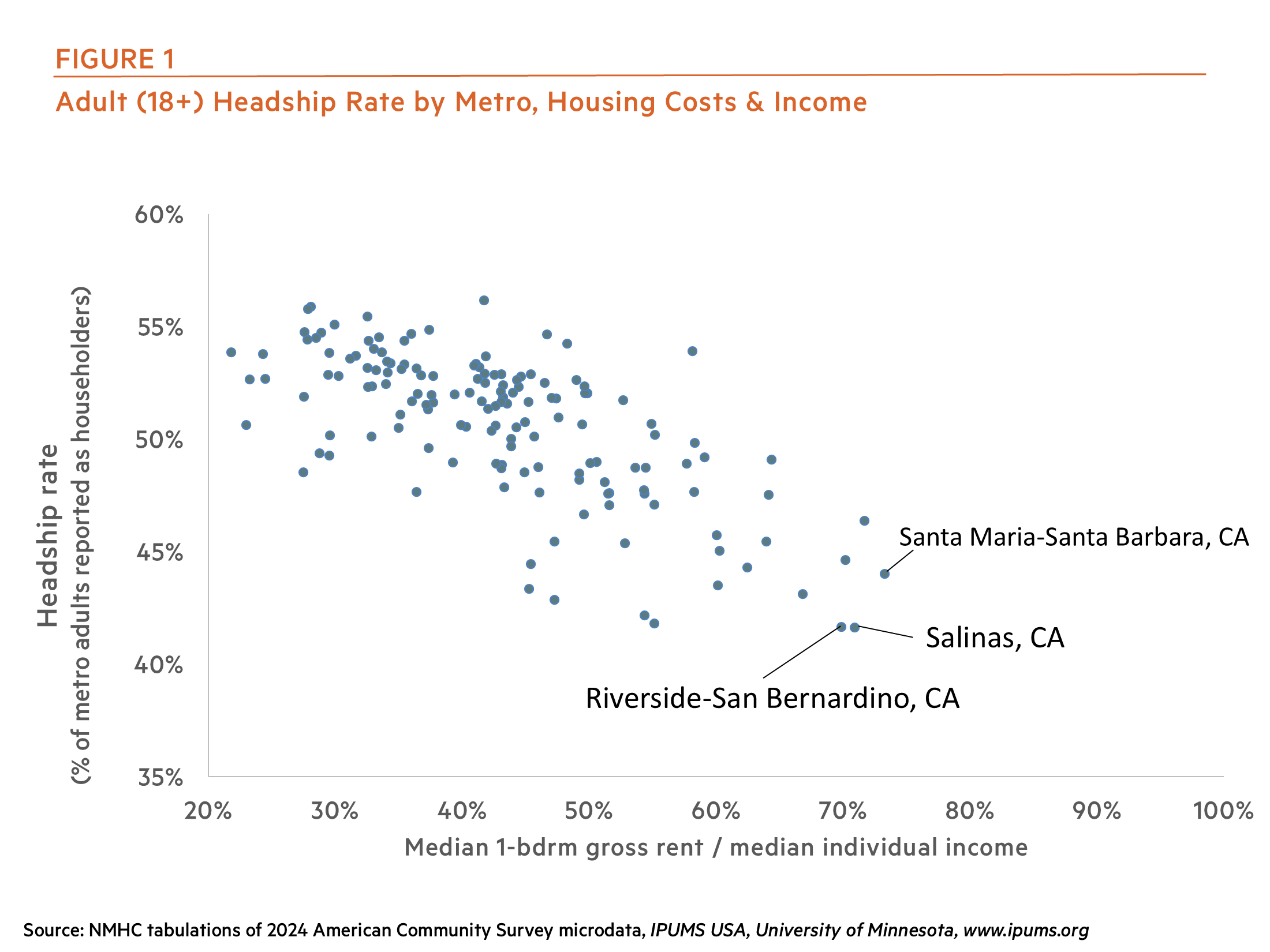
Conversely, metro areas with higher housing costs relative to incomes tend to have a higher share of adults living with other adult family members or roommates, with Salinas and Riverside-San Bernardino again topping the list.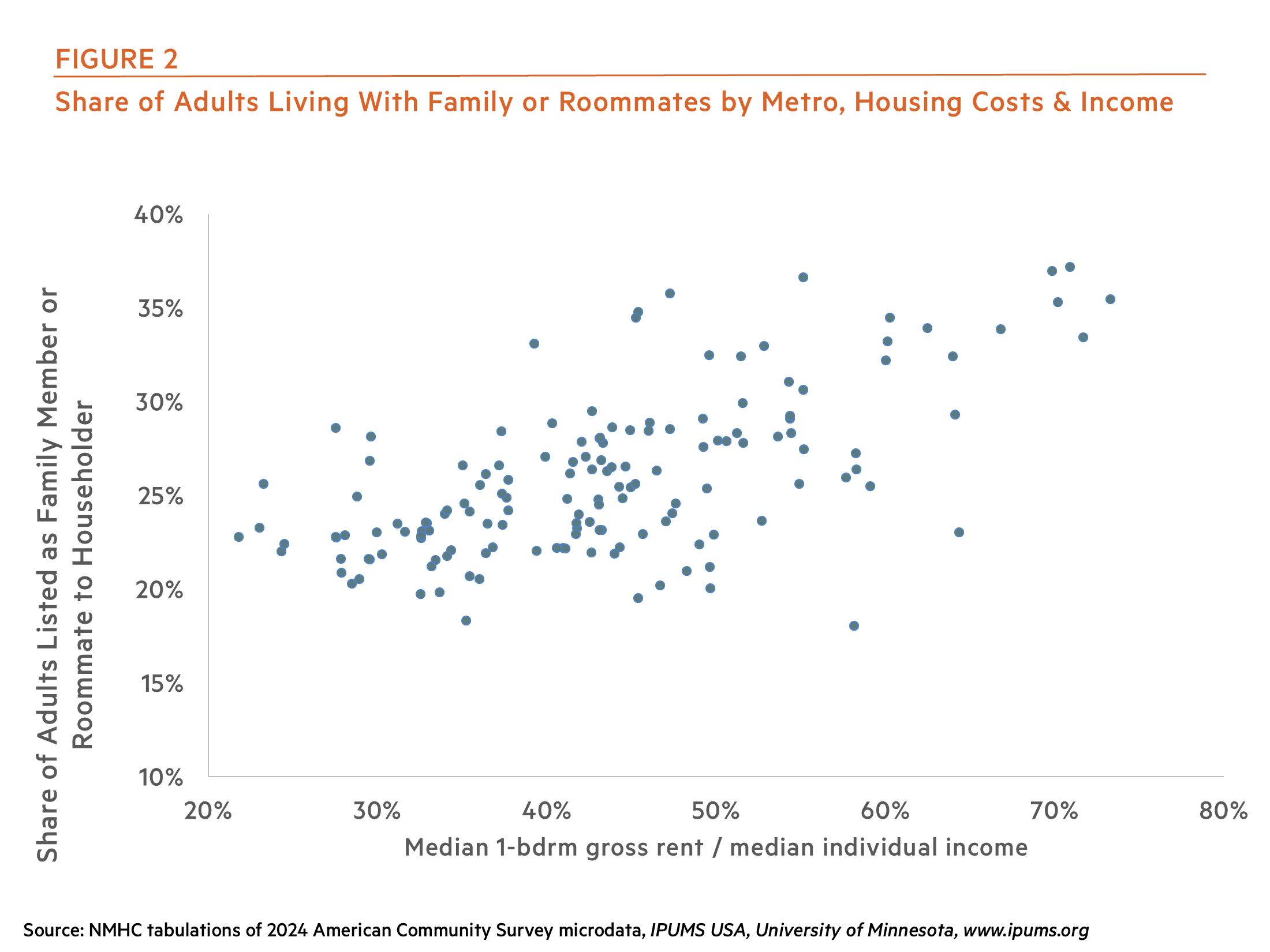
Other Factors Shaping Household Formation
Beyond housing cost and income, there are many other factors that influence whether an individual decides to form their own household—for instance, age, marital status, and educational attainment.
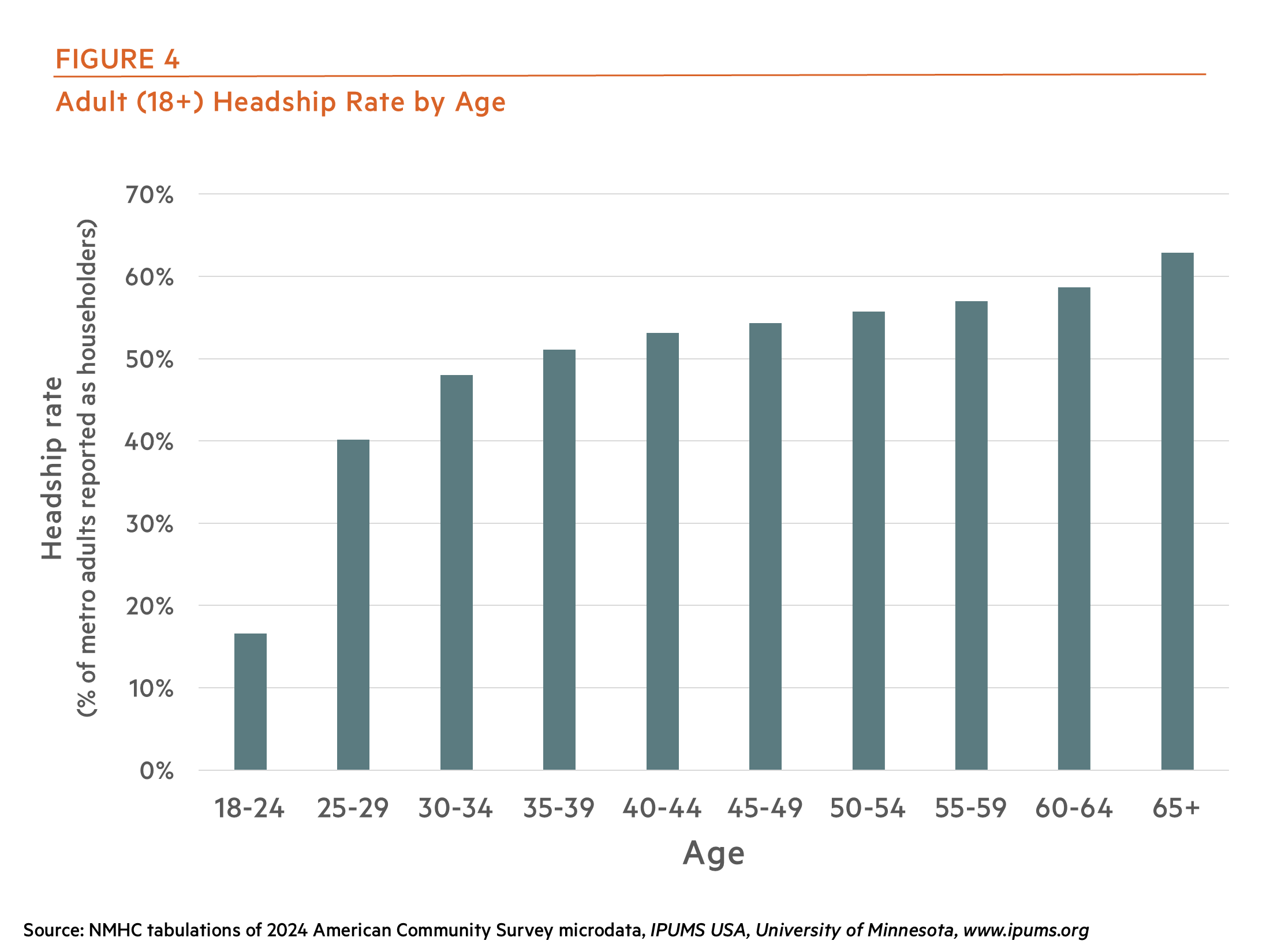
Age: Household formation increases significantly as adults move from their late teens/early twenties into their late twenties and early thirties. Headship rates continue to increase with age later in life as well, albeit at a more moderate pace.
Marital Status: Among younger age cohorts, married individuals are more likely to report being the head of their household compared to those who are never married/single. Instead, a higher share of young, never married/single adults report either being someone’s roommate or the child of a householder.
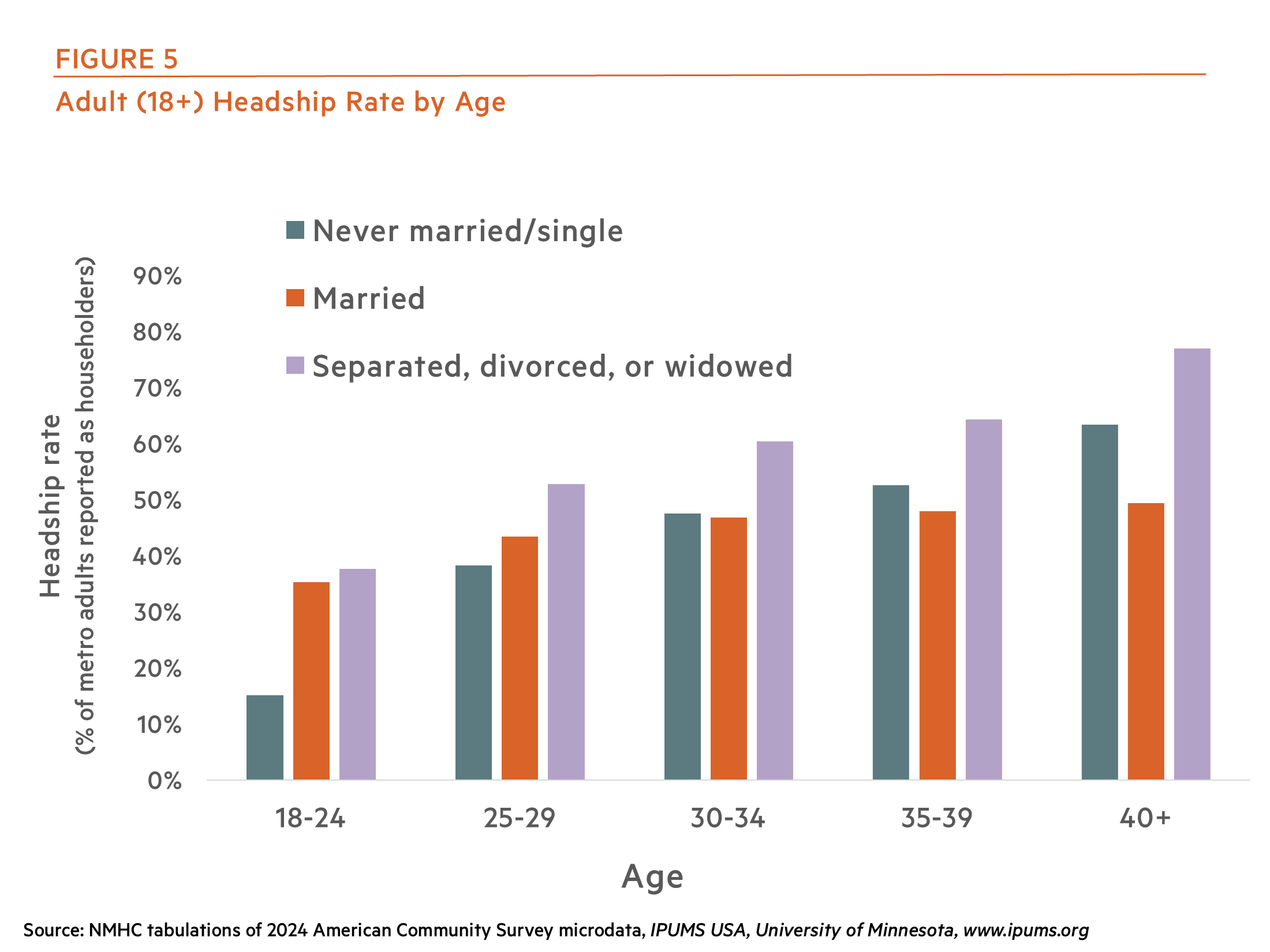
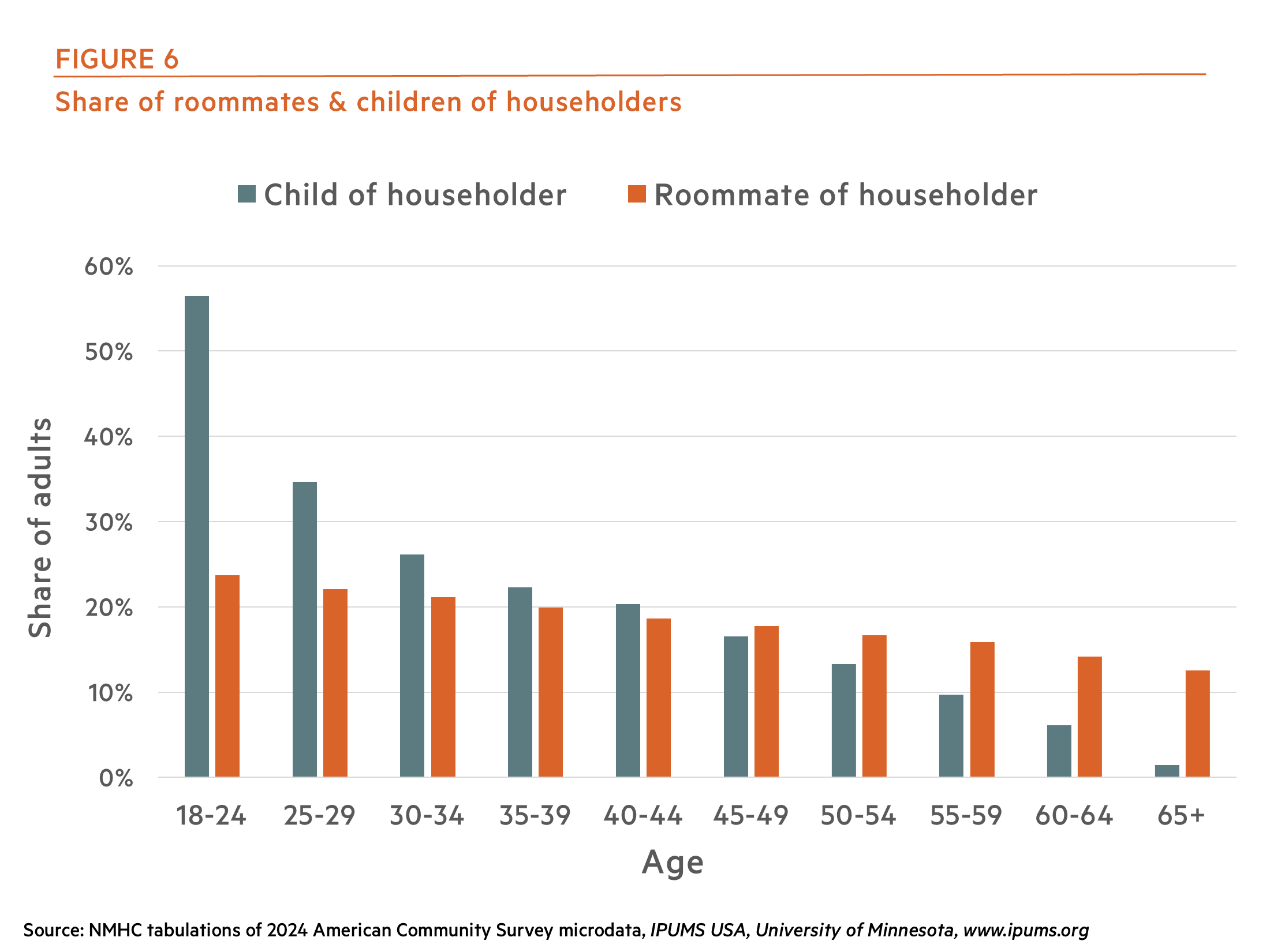
Among older age cohorts, however, this relationship reverses, with married adults having the lowest likelihood of heading a household. This is because married couples typically live together in one house, whereas two single adults would have formed two separate households. At older ages, these single adults are less likely to live with family members or in roommate situations.
Finally, adults who are either separated, divorced, or widowed tend to have the highest headship rates of all groups, regardless of age.
Educational attainment: Individuals with higher levels of educational attainment tend to form households at higher rates, even after accounting for differences in age, marital status, income, housing costs, and other relevant characteristics.
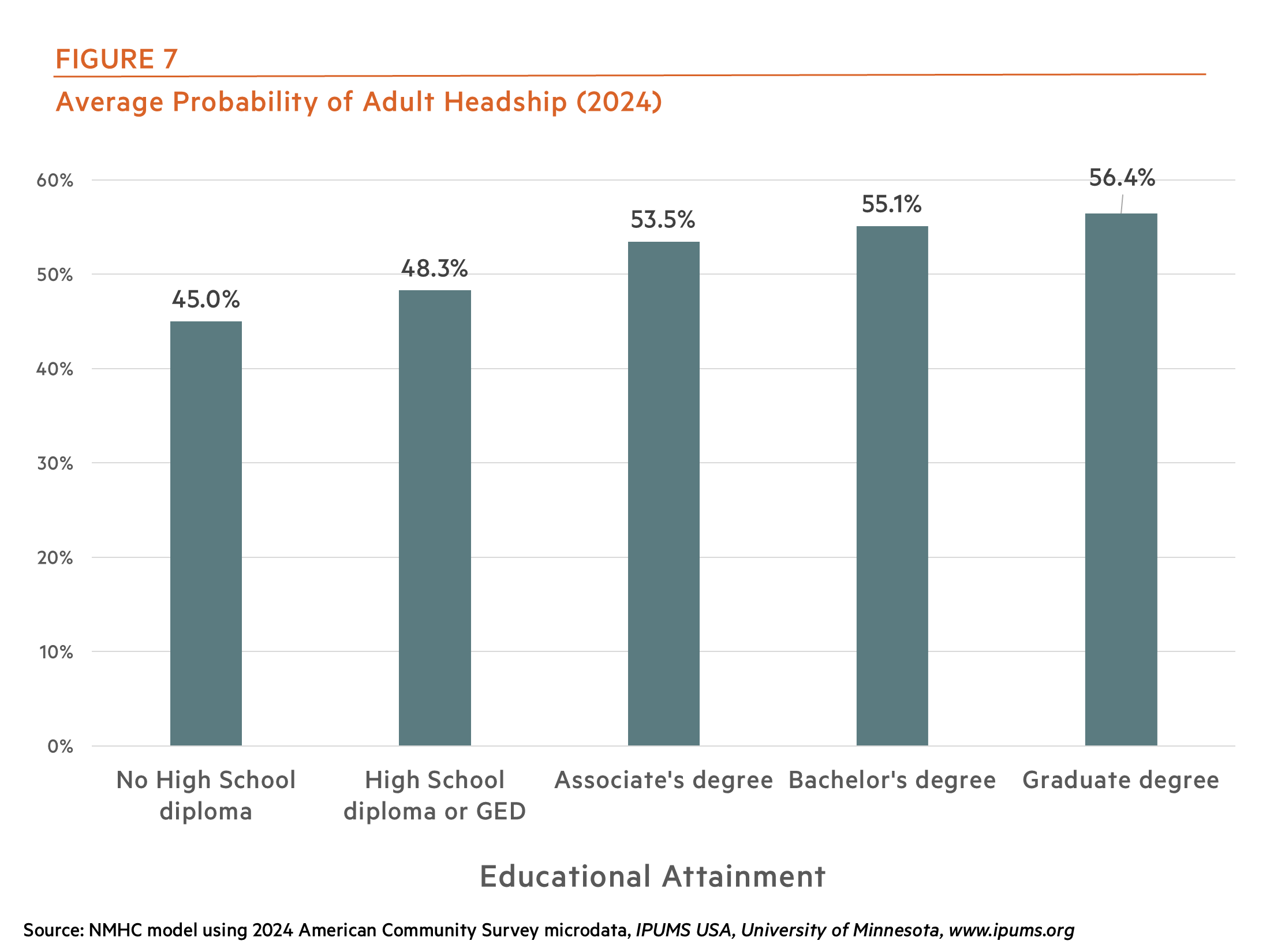
It’s unclear why exactly adults with more education might form households at higher rates, but there are several plausible explanations:
- Expected future earnings: someone with a bachelor’s or graduate degree might expect to earn more money in the future, even if their current income isn’t very high, making them more comfortable renting or purchasing their own home.
- Unobserved wealth: it could be that adults with higher levels of educational attainment tend to come from wealthier families. Therefore, separate from income, this familial wealth could enable them to rent or purchase a home.
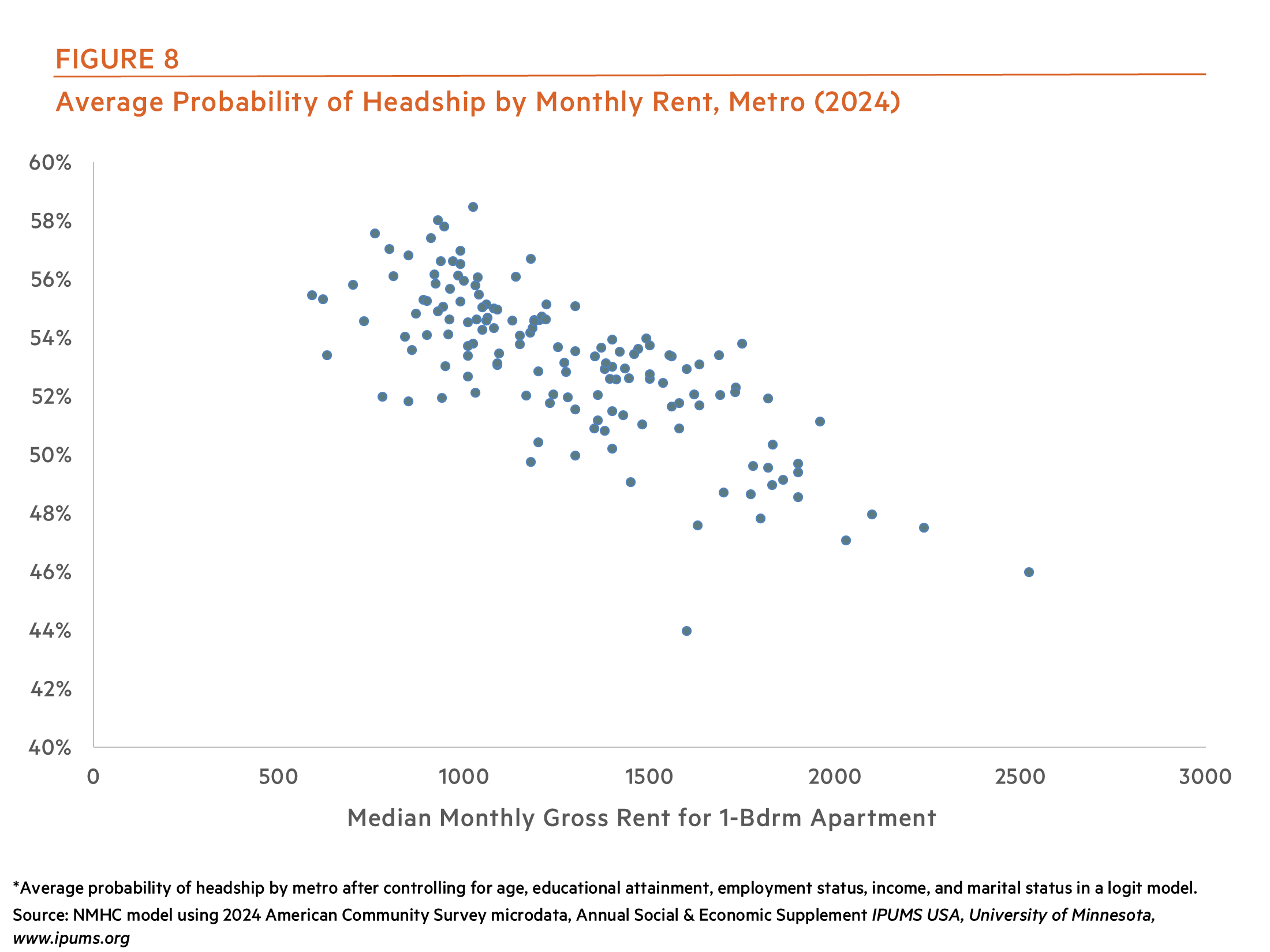
Figure 8 below shows that the relationship between housing costs and household formation/headship rates becomes much stronger after accounting for differences in resident age, marital status, educational attainment, and other demographic characteristics between metro areas.
A Clear Trend Over Time
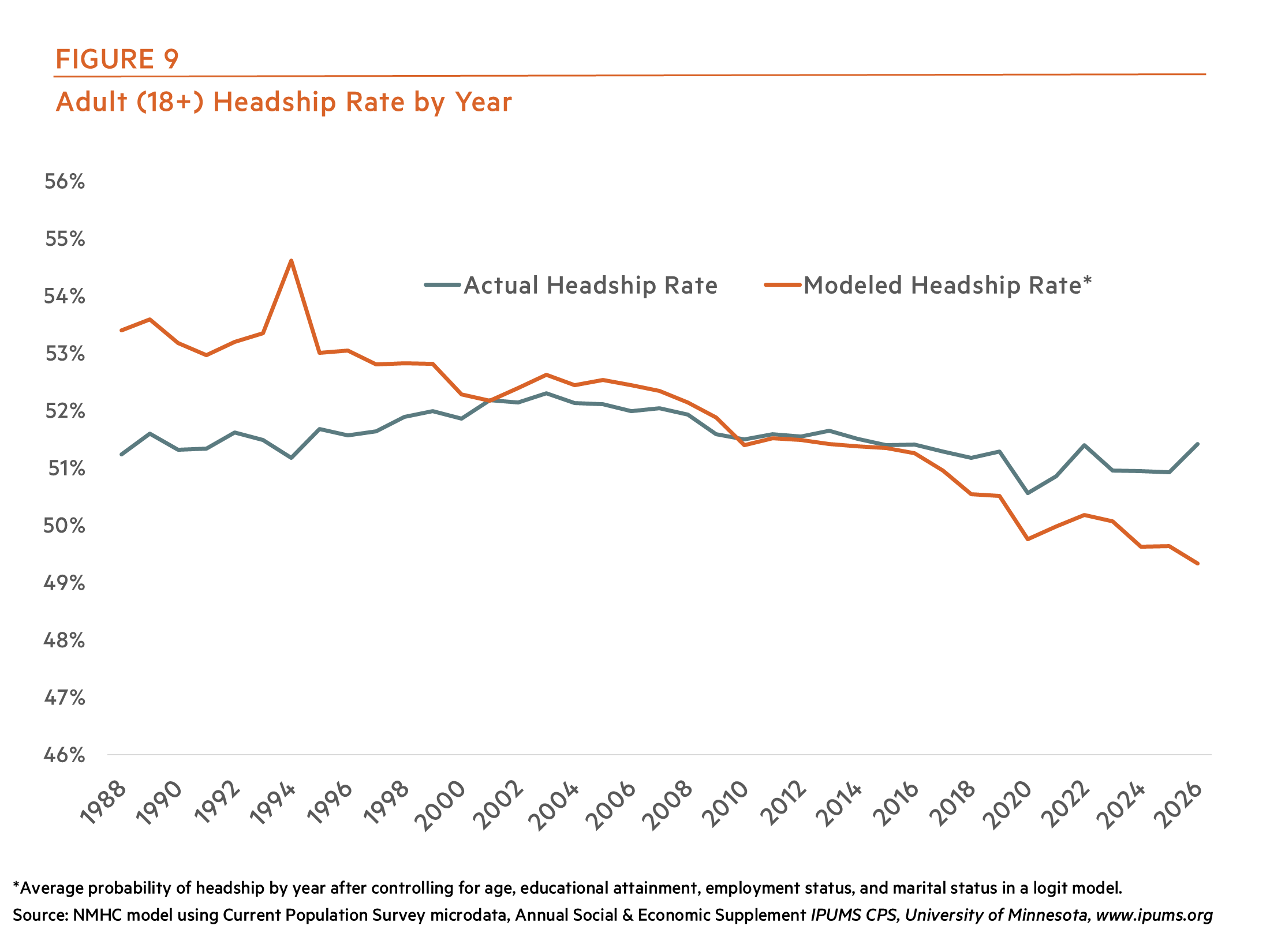
Household formation rates haven’t changed much over nearly four decades (1988-2026), with adult headship increasing slightly from 51.2% in 1988 to 52.2% in 2003 before falling back down to 51.4% in 2026. However, demographic changes during this period—for instance, the adult population becoming older and better educated—have exerted a positive influence on household formation. Once these changes are accounted for, a much clearer trend emerges of adults becoming less likely to form households over time.
The reason for this is likely due to housing costs outpacing incomes. Figure 10, for example, shows that metro areas that saw a larger increase in their median rent relative to incomes from 2014-2024 also tended to record lower changes in their household formation/headship rates. Yet, it is evident from the chart that this was a rather loose relationship, suggesting that there are many other factors influencing household formation.
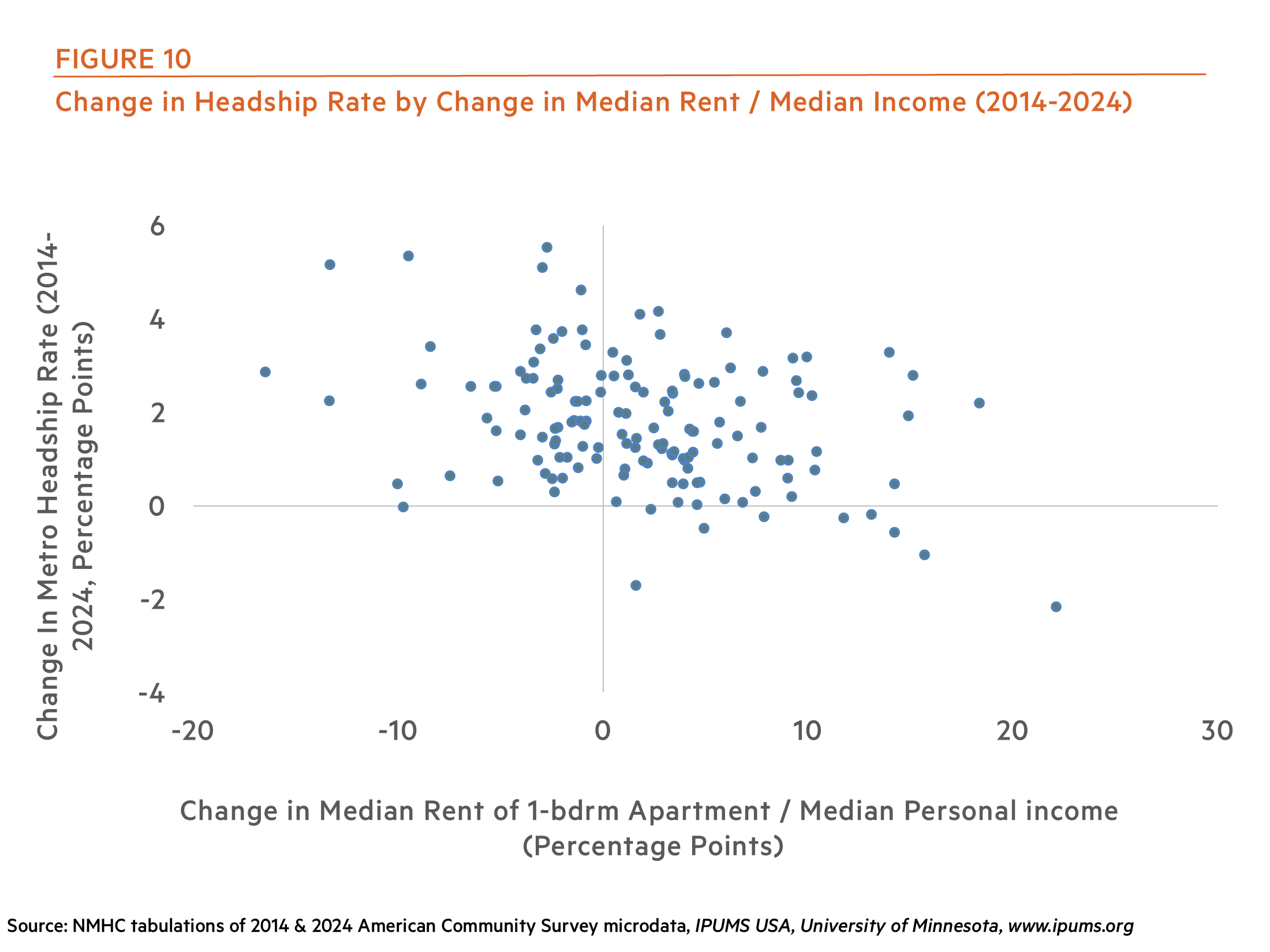
What’s notable, furthermore, is that most metro areas did see an increase in household formation during this ten-year period.
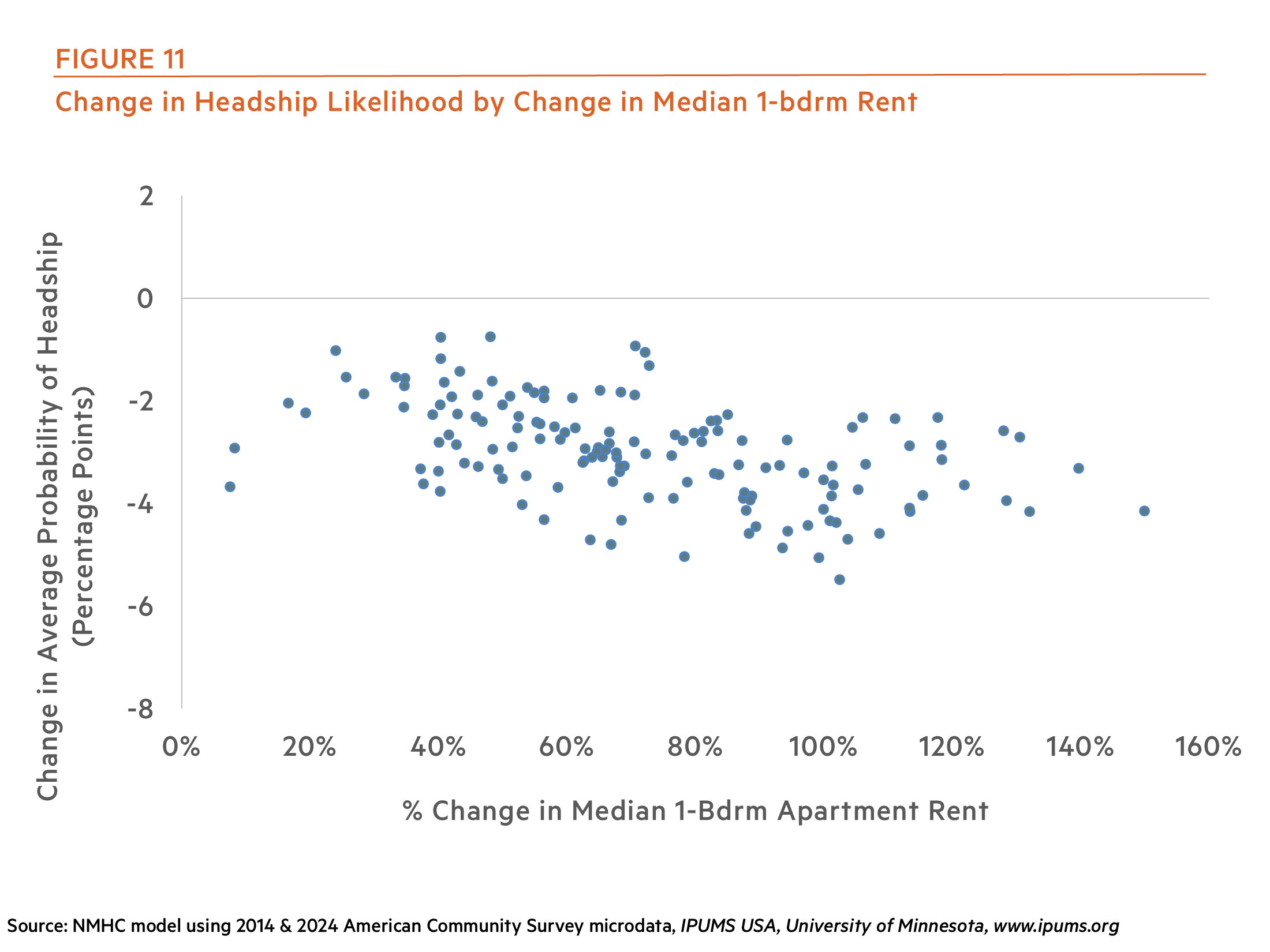
After controlling for other potentially confounding factors—such as age, marital status, educational attainment, employment status, and income—a much stronger relationship emerges in which higher rent increases are associated with lower/decreasing rates of household formation. Figure 11 also shows that for every single metro examined adults in 2024 were less likely to form a household compared to in 2014, after accounting for other demographic and economic factors.
Conclusion
The adults living with parents or roommates in high-cost metros represent households that could form if housing were more affordable. This latent demand can be difficult to estimate because it represents potential demand that is not necessarily reflected in current market activity. By contrast, observable measures of demand, such as apartment absorption, are easier to quantify but do not fully capture how factors such as housing costs, availability and broader economic conditions are limiting households’ ability to rent. While several factors could constrain apartment demand in the years ahead, evidence suggests that substantial unmet demand exists in many metropolitan areas and could translate into actual demand if housing became more affordable there. This may prove difficult in an era of increasing expense and development costs, however.
1 For our analysis, we considered the largest 150 metropolitan statistical areas (MSAs) in the country by number of households in 2024.
Questions or comments on Research Notes should be directed to Chris Bruen, NMHC Sr. Director of Research and Chief Economist.